

Many of us have felt our heart “skip a beat.” But what does that really mean? Is something off with your heart rate? Or with your heart rhythm?
Heart rate and heart rhythm describe two different aspects of how your heart works. Heart rate tells you how many times your heart beats per minute, while heart rhythm describes the pattern of those beats and whether they occur regularly or irregularly. So if your heart “skips a beat,” that means something is off with your heart rhythm.
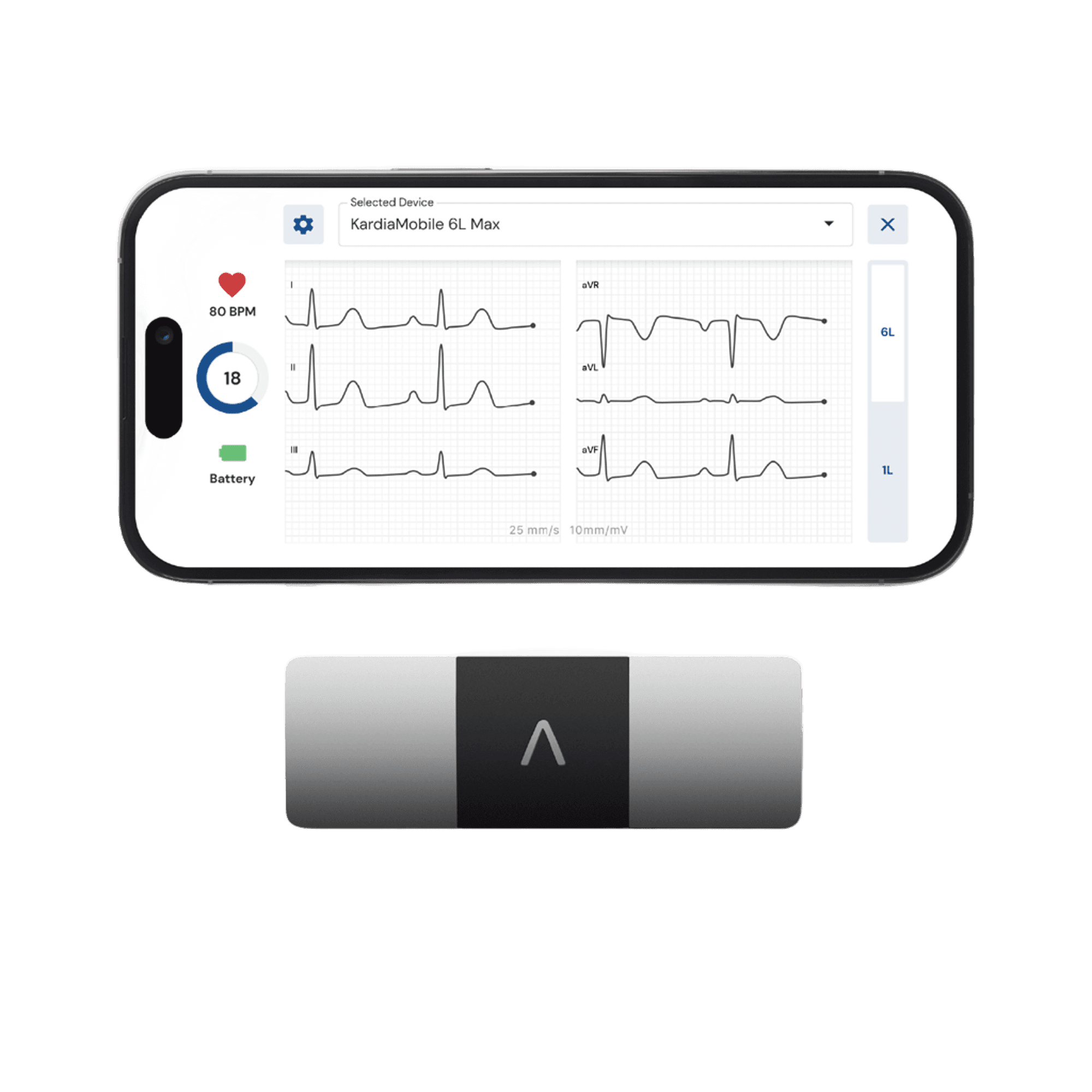
Understanding heart rate versus heart rhythm can help you make better sense of your heart health. And, because heart rate and heart rhythm are different, the tools used to monitor them provide distinct information. A manual pulse check or fitness tracker can tell your heart rate, but they offer less information about its electrical rhythm than a personal EKG. A personal EKG, like Kardia, records the heart’s electrical activity and provides information about both rate and rhythm.
What Your Heart Rate Can Tell You
Your heart rate tells you how fast your heart is beating, measured in beats per minute (bpm). A typical resting heart rate for most adults is between 60 and 100 bpm, but there is no single “good” heart rate for every person or age. Resting heart rate can vary based on factors such as age, fitness level, activity, stress, medications, illness, and overall health.
Because those factors can influence your heart rate, a number outside the typical range does not necessarily signal a problem. Physically active people, for example, may naturally have a resting rate below 60 beats per minute without it being a cause for concern. In general, a resting heart rate below 60 may be called bradycardia, while a resting rate above 100 may be called tachycardia. Neither is automatically dangerous in every person or situation, but they may stem from problems in the heart’s electrical system.
You can check your heart rate manually at the wrist or with a wearable or digital monitor. If the number seems unusually high or low for you, consider the circumstances, including what you were doing and whether you have symptoms. Talk to your doctor if you have concerns.
What Your Heart Rhythm Can Tell You
Your heart rhythm can show whether your heartbeats follow a regular or irregular pattern. The heart’s normal beat pattern is called Sinus rhythm. An arrhythmia (irregular heart rhythm) is a problem with the rate, rhythm, or electrical sequence of the heartbeat. Arrhythmias may cause the heart to beat too fast, too slowly, or irregularly. Some cause sensations such as fluttering, pounding, or skipped beats, while others cause no symptoms.
A heart rate measurement alone may not reveal these changes. An EKG specifically records the heart’s electrical activity, making it possible to see patterns that heart rate cannot show.
Heart rhythm information is important, because some arrhythmias may reduce how effectively the heart pumps blood and delivers oxygen throughout the body. Repeated or unexplained changes should be discussed with a doctor.
Heart Rate vs. Heart Rhythm: Key Differences
Heart rate and heart rhythm do not always change together. Your heart rate can be fast, slow, or within a typical range even when your rhythm is irregular.
For example, someone may have a heart rate of 75 beats per minute, which is within a typical resting range for many adults, while still having an irregular rhythm. In that case, a heart rate measurement may not show the problem, while an EKG records the electrical activity that reveals an underlying rhythm disturbance.
Is AFib a Heart Rate or Heart Rhythm Problem?
Atrial fibrillation (AFib) is an irregular heartbeat that occurs when the heart’s upper chambers (atria) beat out of coordination with the lower chambers (ventricles), which causes the heart to beat too fast, too slow, or irregularly. AFib can also make the heart rate fast or variable, but the underlying issue is the rhythm.
Because AFib affects the heart’s rhythm, it can feel different from person to person. Some people may notice fluttering, racing, pounding, or skipped beats, while others may not have any symptoms. Undetected atrial fibrillation may increase the risk of complications such as blood clots and stroke.
A heart rate monitor may not tell you everything you need to know. It may show that your rate is unusually fast or variable, but an EKG recording from Kardia can show the rhythm behind those changes. For people with AFib, monitoring heart rhythm can capture details that heart rate by itself may miss.
Why Monitoring Heart Rhythm Is Important With AFib
For someone with AFib, regular heart rhythm monitoring can show how the rhythm changes over time. An EKG records the rhythm directly rather than providing only a heart rate measurement, which can be especially important because AFib may occur without symptoms or an obvious change in heart rate.
That makes it helpful to take an EKG when symptoms occur or when you notice a change. The recording gives you something concrete to review with your doctor and, over time, can support more informed conversations about AFib and changes in your heart rhythm.
When Heart Rhythm May Be Concerning
An irregular heart rhythm is not automatically dangerous. How concerning it may be depends on the type of rhythm disturbance, how often it occurs, and whether symptoms are present. Any change in your heart rhythm should be discussed with your doctor, especially repeated or unexplained rhythm changes that occur with dizziness, weakness, fainting, or shortness of breath.
Some rhythm disturbances are more serious and require immediate care. Seek immediate help for chest pain, fainting, severe shortness of breath, signs of stroke, or other sudden or serious symptoms, as they may signal a medical emergency.
How Kardia Helps Monitor Heart Rhythm at Home
Kardia EKGs are designed specifically for heart rhythm monitoring at home. Kardia EKGs are validated by hundreds of clinical studies, FDA-cleared as Class II medical devices, and provide information about both heart rhythm and heart rate.
For anyone actively managing a heart condition like AFib or other rhythm concerns, KardiaMobile 6L is the tool for proactive monitoring. KardiaMobile 6L is the #1 cardiologist-recommended personal EKG. While many people assume smartwatch EKGs are sufficient, they only record a single-lead EKG—just one view of your heart's electrical activity. KardiaMobile 6L records a 6-lead EKG in 30 seconds, providing six views of the heart and six times more heart data than a smartwatch.
More leads give you (and your doctor) a more comprehensive picture of your heart rhythm. KardiaMobile 6L instantly detects Normal Sinus Rhythm, AFib, Bradycardia, and Tachycardia on your phone. Plus, a doctor can detect over 30 different conditions from a 6-lead EKG recording—many of which a single-lead EKG may miss.
Understand More Than Your Heart Rate With Kardia
Heart rate tells you how fast your heart is beating, but it does not show your heart’s rhythm. Kardia personal EKGs let you record and save your heart rhythm at home to review over time or share with a doctor.
You can compare Kardia personal EKG options to find the device that best fits your monitoring needs. If you have concerning symptoms or unusual EKG recordings, discuss them with a doctor.